Answering questions about our education and membership

We've gotten a number of excellent and illuminating questions about the Alliance of Cardiovascular Professionals recently—enough to put them together as a blog. We've got news, too—we're updating our online continuing education platform!

Does ACVP offer continuing education online?

"I am a registered cardiac sonography tech. I was wondering if your organization offers any continued education courses online. If so will you please direct me to the right location... I am having such a hard time navigating through these websites. Thanks for your help!"

Yes! ACVP does offer continuing education courses online through CVCEU.ORG.

Continue reading Answering questions about our education and membership

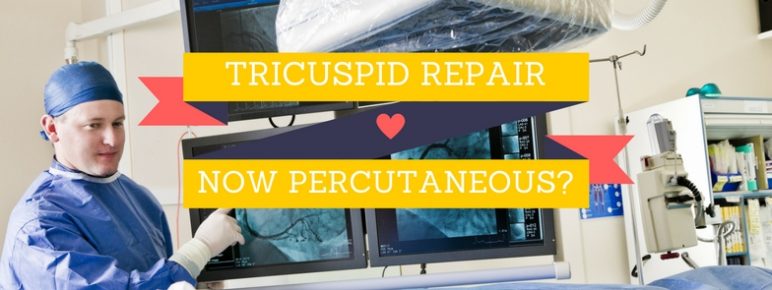
Cath innovation: Cardioband repairs first leaky tricuspid

Valtech Cardio's Cardioband system brings direct annuloplasty to the field of percutaneous coronary intervention—for catheter-based mitral valve repair and now, tricuspid valve repair.

A team from the University Hospital Zurich led by Francesco Maisano, MD recently succeeded in the first ever minimally invasive procedure using Cardioband to repair a leaky tricuspid valve, according to yesterday's press release from the University of Zurich.

The news comes shortly after Valtech shared follow-up data from a multi-center Cardioband Mitral study at the PCR London Valves 2016 conference. Results showed a "significant and consistent reduction in MR" with a "safety profile similar to equivalent transcatheter procedures" according to the session slides.

Continue reading Cath innovation: Cardioband repairs first leaky tricuspid

Video: researchers use light to defibrillate arrhythmias in mice

Scientists from Johns Hopkins University and the University of Bonn in Germany have applied advances in optogenetics to terminate arrhythmias in mice.

In a new study published online yesterday in the Journal of Clinical Investigation, authors prove the concept of optogenetic defibrillation, where epicardial illumination can effectively terminate ventricular tachycardia—a potential alternative to implantable defibrillators.

"Strong electrical shocks can damage the heart and cause severe pain," write the authors. "Our results... could potentially be translated into humans to achieve nondamaging and pain-free termination of ventricular arrhythmia."

Continue reading Video: researchers use light to defibrillate arrhythmias in mice

Broader CMR or SPECT imaging reduces unnecessary angiography

Results from the CE-MARC 2 trial, announced today at the European Society of Cardiology (ESC) Congress, suggest that unnecessary angiography could be significantly reduced by favoring noninvasive cardiovascular magnetic resonance (CMR) imaging or single photon emission computed tomography (SPECT) to initially investigate patients with suspected coronary artery disease (CAD).

These findings could have an "important impact on referral rates for invasive coronary angiography," says the ESC press release.

Continue reading Broader CMR or SPECT imaging reduces unnecessary angiography