Are you “Choosing Wisely” with Cardiac Imaging?

Results are in from the Choosing Wisely initiative - a campaign designed to reduce the use of frequent tests deemed "low value" - like cardiac imaging.

A recently published study from JAMA Internal Medicine examining the frequency and trends of services from 2012 Choosing Wisely recommendations across 25 million Anthem health plan members found statistically significant reductions in cardiac imaging and other "low value" services.

Some context: many uses of cardiac imaging were deemed "low value" by the ACC in 2012.

The American College of Cardiology contributed to some of the earliest Choosing Wisely recommendations from 2012 - the recommendations that this study tracked. One of these recommendations has since been withdrawn due to new science, but the four that remain relate to cardiac imaging.

They are:

Continue reading Are you “Choosing Wisely” with Cardiac Imaging?

Taylor Swift in the Cath Lab? Music in the Cath Lab Debate

Does music play during procedures in your lab? Who chooses the music?

A recent study published in the Aesthetic Surgery Journal found that "when plastic surgeons listen to music they prefer, their surgical technique and efficiency when closing incisions is improved," says a University of Texas Medical Branch press release.

While many studies have been conducted supporting the idea that music reduces stress and promotes efficiency for operating room staff, this study adds to a more limited evidence base that suggests music can improve technical performance and speed of a procedure.

Why does it matter? Reducing the time of a procedure can lead to significant cost savings, of course, and in cardiac emergencies where "time is muscle," promoting procedure efficiency is key to providing quality care.

But should the cardiologist control music in the cath lab?

Continue reading Taylor Swift in the Cath Lab? Music in the Cath Lab Debate

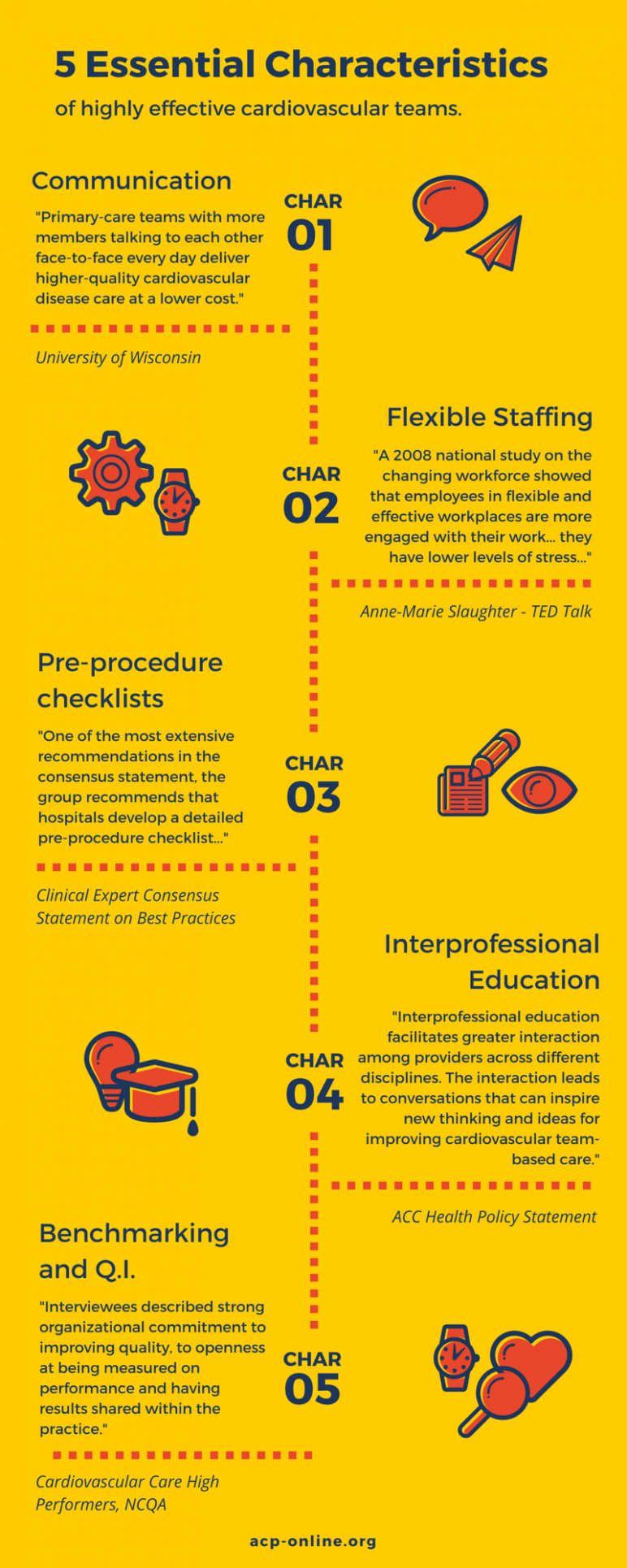
Benchmarking and Quality Improvement – Essential Characteristic #5

cardiovascular quality improvement

Is it obvious? Highly effective cardiovascular teams demonstrate commitment to cardiovascular quality improvement.

In a 2014 report entitled "Cardiovascular Care High Performers," the National Committee for Quality Assurance detailed the importance of benchmarking and continuous cardiovascular quality improvement.

What is the practice culture of effective cardiovascular teams, according to the report? It's characterized by a "strong organizational commitment to improving quality, to openness at being measured on performance and having results shared within the practice, to working on closing gaps and to trying new strategies to engage patients."

Commitment and openness, especially to being measured, sharing results, and working on closing quality gaps, has been proven to improve outcomes, from a single group to an entire state.

Continue reading Benchmarking and Quality Improvement – Essential Characteristic #5