Mitral Valve Repair: “An Opportunity for Quality Improvement”

Even in low-volume VA centers, mitral valve repair outcomes best replacement.

A large multi-center study presented at the 96th American Association for Thoracic Surgery Annual Meeting followed trends in mitral valve (MV) surgeries in the Veterans Administration Health System from 2001-2013 and provided further evidence to support the use of mitral valve repair over mitral valve replacement in patients with degenerative MV disease.

"MVRepair has a greater short-term protective effect against mortality than MVReplace has in patients with primary degenerative MR," write the authors. "Despite this survival advantage, the rate of MVRepair is low at some centers; therefore, there is clearly an opportunity for quality improvement."

Beyond a survival advantage, mitral valve repair was also found to result in fewer complications and shorter hospital stays.

Is that success dependent on volume? Not necessarily.

Continue reading Mitral Valve Repair: “An Opportunity for Quality Improvement”
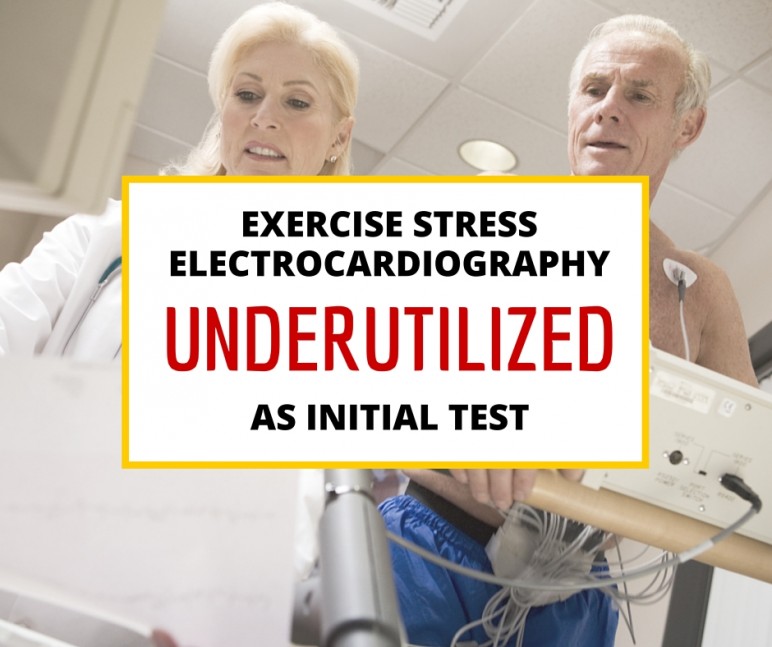
Is ExECG your default diagnostic?

"Exercise stress electrocardiography (ExECG) is underutilized as the initial test modality in patients with interpretable electrocardiograms who are able to exercise. Although stress myocardial imaging techniques provide valuable diagnostic and prognostic information, variables derived from ExECG can yield substantial data for risk stratification, either supplementary to imaging variables or without concurrent imaging. (abstract)

What's your diagnostic test workflow?

A recent paper in JACC: Cardiovascular Imaging reviewed literature on the latest advances in exercise stress electrocardiography (ExECG) and argued that despite the ACC's recommendations, the test is still "underutilized" as the initial diagnostic test modality for suspected coronary artery disease.

Continue reading Is ExECG your default diagnostic?

Cardiovascular Risk Report: New Metabolic Syndrome Score Tracks Risk Over Time

Cost-reducing guidelines like the ACC's guidelines concerning cardiac imaging from 2012 require better profiling of what makes patients high risk for cardiovascular disease - especially when they make caveats based on "high-risk markers."

Are all high-risk markers known? What's on the horizon in markers for cardiovascular disease?

We've already discussed two new high-risk markers - a factor known as "stem cell factor" that's as predictive as cholesterol levels and a gene that interacts negatively with estrogen in women.

Here's another recent case of researchers building a better preventative mousetrap - a new test can measure the severity of metabolic syndrome and thus track and predict cardiovascular disease risk over time - from youth.

new test for teens tracks risk

Continue reading Cardiovascular Risk Report: New Metabolic Syndrome Score Tracks Risk Over Time

Cardiovascular Risk Report: New Genetic Risk in Women Identified

With a proliferation of guidelines designed to reduce costs based on the risk profiles of patients, and a more general trend towards a preventative care framework, it’s important to stay on top of the latest research into these risk factors for cardiovascular disease.

What constitutes a high-risk patient? What’s new in risk assessment? We've already discussed a new factor identified with a predictive value similar to cholesterol levels. Researchers have also found a gene that indicates high risk for heart disease in women.

3

Continue reading Cardiovascular Risk Report: New Genetic Risk in Women Identified