AACC scientists identify new cardiac biomarker

Plus, get ready for high sensitivity cardiac Troponin assays in practice.

Laboratory medicine experts discovered a new lipid biomarker panel to detect heart failure with reduced ejection fraction (HFrEF) even before symptoms present, with "much greater certainty than standard tests for this condition," according to a January 5 press release from the American Association for Clinical Chemistry (AACC).

The January issue of the AACC's journal, Clinical Chemistry focuses on cardiovascular disease and features research reflecting a "growing understanding of the molecular signatures of heart disease," according to the press release, and a trend towards developing "more precise tests for the early diagnosis, monitoring, and targeted treatment."

The study in question identified three new cardiac lipid biomarkers, a cardiac lipid panel (CLP), which "significantly improved diagnostic performance" when combined with the current standard biomarker approach for diagnosing heart failure, NT-proBNP.

Continue reading AACC scientists identify new cardiac biomarker

Answering questions about our education and membership

We've gotten a number of excellent and illuminating questions about the Alliance of Cardiovascular Professionals recently—enough to put them together as a blog. We've got news, too—we're updating our online continuing education platform!

Does ACVP offer continuing education online?

"I am a registered cardiac sonography tech. I was wondering if your organization offers any continued education courses online. If so will you please direct me to the right location... I am having such a hard time navigating through these websites. Thanks for your help!"

Yes! ACVP does offer continuing education courses online through CVCEU.ORG.

Continue reading Answering questions about our education and membership

Video: researchers use light to defibrillate arrhythmias in mice

Scientists from Johns Hopkins University and the University of Bonn in Germany have applied advances in optogenetics to terminate arrhythmias in mice.

In a new study published online yesterday in the Journal of Clinical Investigation, authors prove the concept of optogenetic defibrillation, where epicardial illumination can effectively terminate ventricular tachycardia—a potential alternative to implantable defibrillators.

"Strong electrical shocks can damage the heart and cause severe pain," write the authors. "Our results... could potentially be translated into humans to achieve nondamaging and pain-free termination of ventricular arrhythmia."

Continue reading Video: researchers use light to defibrillate arrhythmias in mice

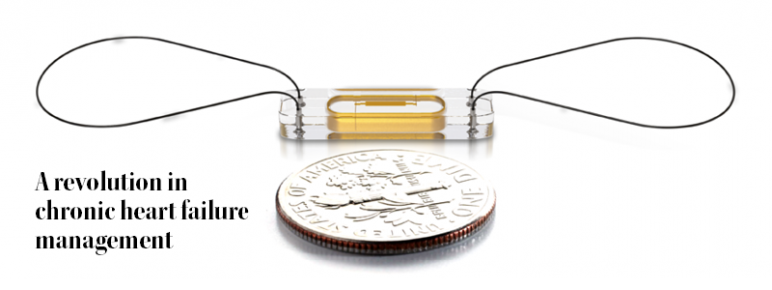
A revolution in chronic heart failure management and more in CV Directions Vol. 3, No. 1

This is the first and only FDA-approved heart failure monitoring solution proven to reduce heart failure hospital admissions when used by physicians to manage heart failure. And the reduction is significant— 28 percent within the first six months and 37 percent over 15 months demonstrated in a large randomized study...

Learn more about CardioMEMS, find strategies to improve case mix index, or build a learning community in your team through preceptorship—all inside the Alliance of Cardiovascular Professionals flagship, peer-reviewed publication, CV Directions.

Continue reading A revolution in chronic heart failure management and more in CV Directions Vol. 3, No. 1